
"Over 8 years working in sports media analytics I've learned one key truth: a quality portal doesn't sell aggressive betting. Our mission at iGaming Bangladesh is to give you dry facts about matches, disciplines, and risks. Poker online is a game of skill and mathematics, not a guaranteed income. Start playing only when you understand the difference between an educational demo mode and the strict realities of real-money play." - Nadia Farzana Haq, Chief Editor of Sports Events, iGaming Bangladesh.
Table of Content
- What Is Poker Online and Which Format Suits You
- Legal Status and Risks for Players in Bangladesh
- Which Poker Games Are Most Popular Online
- Hand Rankings: The Hierarchy Every Player Must Know
- How to Start Poker Play Without Unnecessary Barriers
- Where Is the Advantage: Free Play, Demo, or Poker Real Money
- How to Choose the Best Poker Casino or Poker Rooms
- What to Know About Gameplay: Cards, Hand, Table, and Chips
- Poker Review: Who Is This Format For
- Glossary of Key Poker Terms
- FAQ About Poker Online
Poker Online - How to Play for Free, for Real Money, and Choose the Best Format

The global online poker market is growing at a pace that's hard to ignore. According to SNS Insider, market volume reached approximately USD 4.07 billion in 2024, with a forecast to grow to USD 9.00 billion by 2032 at a CAGR of 10.48%. Other analytical firms estimate the broader market, including all online poker-adjacent products, at USD 6.27 billion in 2025, projecting growth to USD 22.40 billion by 2034 at a CAGR of 15.20% (SNS Insider, Online Poker Market Report, 2024). The variance reflects different methodologies and regional coverage across research firms.
For audiences in Bangladesh, the topic of iGaming and poker is often surrounded by myths and aggressive advertising. This material has been created as an atomic knowledge base: we objectively break down formats, legal risks, gameplay mechanics, and hand rankings, drawing exclusively on verified research and responsible gaming principles.
Last updated: July 2026.
What Is Poker Online and Which Format Suits You
Poker online is a digital adaptation of the classic card game, available in four main formats: introductory (demo), social (free), competitive (real money), and downloadable client (download). Your choice depends entirely on your end goal. Learning the rules? Entertainment without risk? Competing against real opponents? Each path leads to a different experience.
For quick orientation across the basic structures, here is a matrix of available game modes.
| Format | Primary User Goal | Level of Financial Risk | Registration and Access Requirements |
|---|---|---|---|
| Poker demo | Learning interface and basic rules | Zero (renewable virtual credits used) | Often no registration required; quick browser launch |
| Poker free (social) | Practising skills, entertainment, passing time | Indirect (risk of transitioning to real-money play, approx. 26%) | Mandatory registration, often via social networks |
| Poker real money | Competition, strategy testing, winning payouts | High (direct risk of losing own funds) | Strict KYC, identity verification, deposits required |
| Poker download | Stable multi-tabling (playing at multiple tables) | Depends on chosen mode within the client | Software download, installation, full authorisation |
The 26% migration figure is drawn from an observational study of social casino players (see synthesis by Wohl et al., 2023). Data on the correlation between simulated gambling and PGSI scores comes from a separate 2024 cross-sectional survey of gambling formats.
How Poker Demo, Poker Free, and Poker Real Money Differ
The core difference lies in the level of financial risk and behavioural expectations. Poker demo offers an isolated environment for beginners with no option to save progress. The free format (social poker) is gamified: playing poker here includes rankings and virtual tournaments, but without any withdrawal of funds.
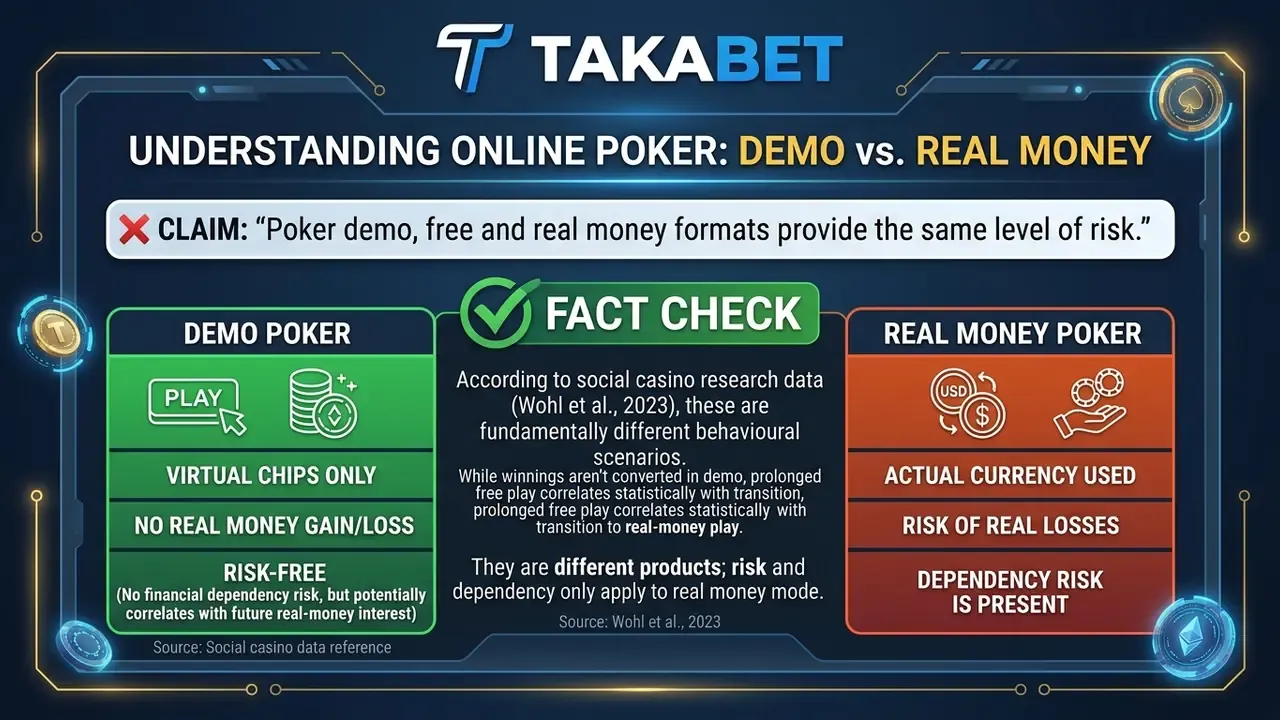
In the poker real money format, financial transactions are real. The behaviour of poker players changes drastically. Stress levels increase. Responsibility for every decision rises. Research shows that approximately 26% of social poker players eventually transition to real-money play, which demands conscious control and strict budget limits.
"Players who use social casino games for skill practice or to fill time are the most likely to transition to real-money gambling." - Wohl et al., social casino and gambling migration review (synthesis).
Worth noting: a representative German survey found that participation in any form of simulated gambling is statistically associated with monetary gambling and higher harm indicators. This reinforces the need for deliberate self-awareness before moving between formats (Explorative study of simulated gambling, Germany, representative sample, 2024-2025).
"All forms of simulated gambling, except free loot boxes, are statistically associated with higher problem gambling scores on the PGSI scale." - Study of simulated vs. monetary gambling order of first play, 2024.
When to Choose Browser Play and When to Choose Poker Download
Browser play suits quick test sessions within a poker game, while a downloadable client is necessary for complex analytics and stability. Modern browser-based clients use HTML5 canvas rendering and WebSocket connections; game logic and random number generation remain on the server side (Technical analysis of mobile browser clients for crypto-poker, 2024-2025). However, the browser version at major poker rooms such as PokerStars does not support multi-tabling and limits players to formats like NLHE and PLO with restricted buy-in caps.
If you have ambitions to track deep statistics through HUD integration, you will need a poker download. Standalone clients provide a direct connection to servers, which is critical for a stable competitive format and minimises the risk of disconnection during an important hand. For most poker players, though, the browser is more than enough to get started.
Legal Status and Risks for Players in Bangladesh
Before choosing any format or platform, players in Bangladesh should understand the local legal landscape. This step matters more than picking the right poker game. Bangladesh operates under the Public Gambling Act of 1867, inherited from the colonial era, which broadly prohibits gambling activities. The law was written long before the internet existed and does not explicitly mention online poker, creating a legal grey zone for digital card games.
Key practical considerations:
- No domestic regulation. There is no licensing authority in Bangladesh for online poker or iGaming. International platforms operating offshore are the only accessible option, but they exist outside local legal protection.
- Banking and payment restrictions. Conventional banking channels (bKash, Nagad, bank transfers) may flag or block transactions to known gambling platforms. Many players in the region use cryptocurrency wallets or e-wallets as alternative deposit and withdrawal methods.
- Enforcement reality. While large-scale enforcement against individual online poker players is rare, participating carries inherent legal uncertainty. Players should be aware that laws may be interpreted or updated at any time.
- Age restriction. Regardless of jurisdiction, no reputable platform permits anyone under 18 years of age to play poker.
Disclaimer: This information is general in nature and does not replace consultation with a local legal professional. Online gambling occupies a grey legal zone in Bangladesh. Verify current regulations before participating, and never stake money you cannot afford to lose.
For those seeking a broader understanding of the industry beyond poker, it is helpful to explore the concept of iGaming as a whole.
Which Poker Games Are Most Popular Online
Texas Hold'em dominates the industry, generating approximately 55% of online poker revenue in 2024 according to SNS Insider's market segmentation. Cash games account for roughly 48% of total segment revenue. Following Hold'em, Omaha formats are growing at a CAGR exceeding 12%, alongside hybrid casino games. Users clearly distinguish competitive poker games (where skill determines the outcome) from chance-driven products like poker slots.
Texas Hold'em: The Most Accessible Entry Into a Poker Game
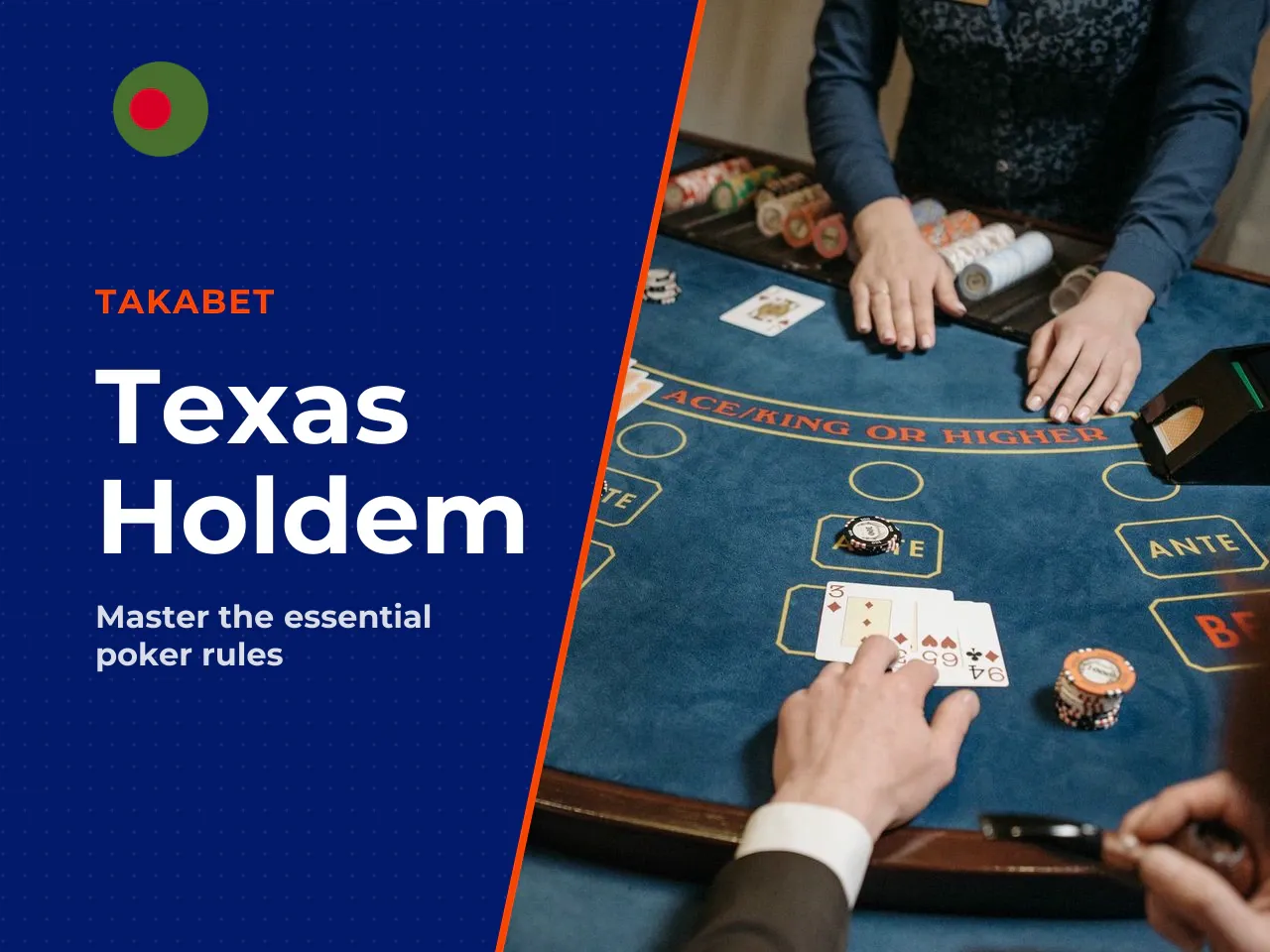
Texas Hold'em is chosen by new players because of its simplest rule set: two hole cards and five community cards on the table. This is the format with the greatest volume of educational materials available, from free YouTube tutorials to structured courses. No wonder most poker tournaments worldwide use Hold'em as the default.
Success of a hand here depends not only on the luck of the deal, but also on the mathematical understanding of table position. The accessibility of this format in online poker makes it the universal standard for both the local audience in Bangladesh and the worldwide community. If you are going to play poker for the first time, Hold'em is almost certainly where you will begin.
Beyond Hold'em, other popular variants:
- Omaha (Pot-Limit Omaha):Unlike Hold'em, each player receives four hole cards but must use exactly two of them combined with three community cards to form a hand. This creates more complex decision-making and larger pots, making it the second most popular format online. Many experienced poker players consider PLO the natural next step after mastering em poker basics.
- Seven-Card Stud:A format with no community cards at all. Each player receives seven cards, three face-down and four face-up, and builds the best five-card hand. Before Hold'em's rise, Stud was the dominant American poker game. It remains available at most major online rooms.
- Five-Card Draw:The classic home-game variant. Players receive five face-down cards and may exchange some or all of them for new ones. While less common in online poker rooms, it remains a favourite for casual play and is available on several platforms.
- Razz:A lowball variant where the goal is to assemble the lowest possible five-card hand. Aces always count as low. Razz has been part of the WSOP since the 1970s and appeals to players seeking a strategic change of pace.
How Poker Slots Differ from Classic Poker Games
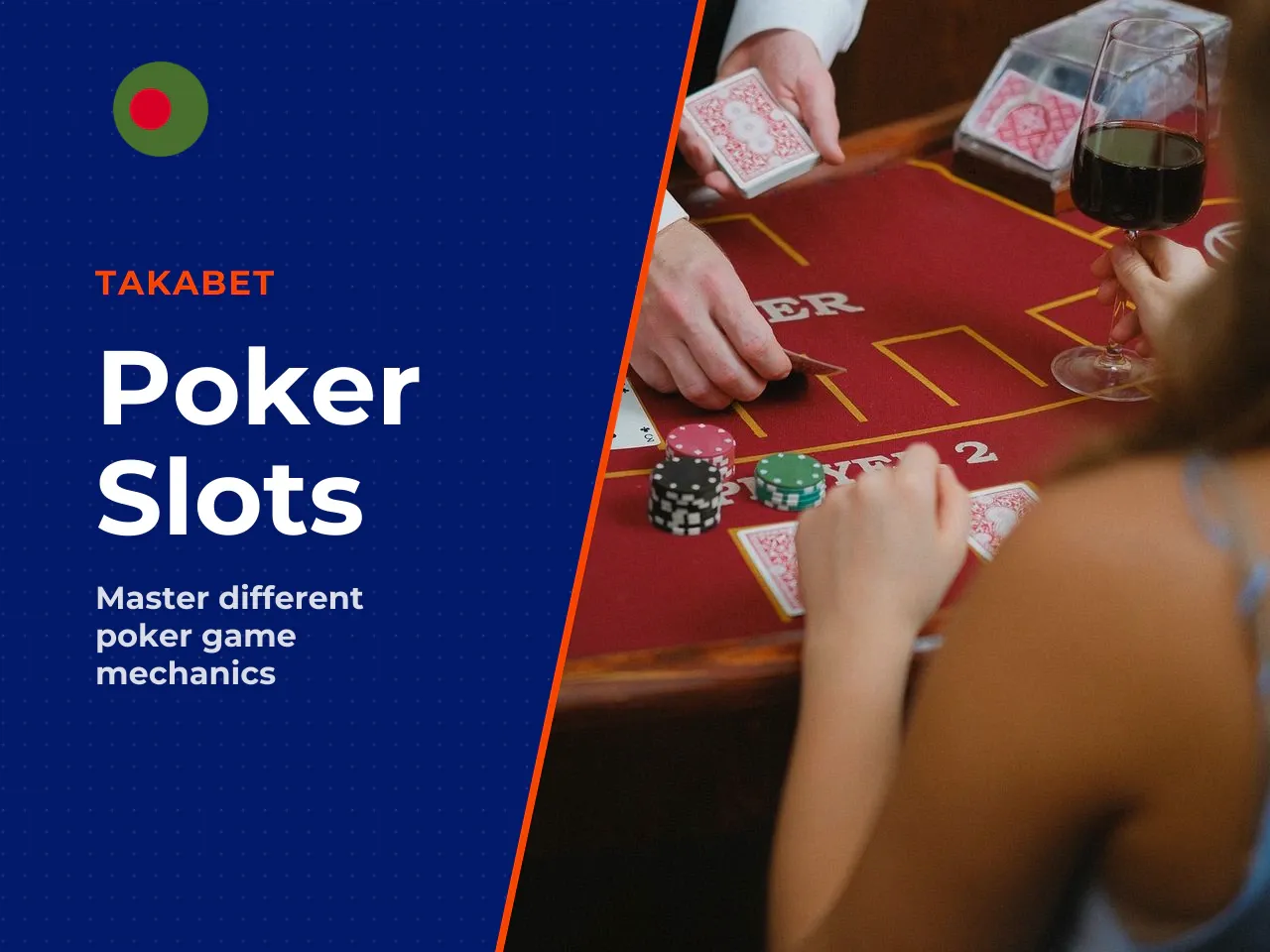
The fundamental difference lies in the outcome mechanic. A poker slot is controlled by a random number generator (RNG) playing against a casino algorithm, while classic poker is a skill-based competition against other people. This distinction matters enormously.
Where classic card play has a fixed room rake and allows you to profit from opponents' mistakes, machines (slots) have a return-to-player percentage (RTP) built into their firmware. For example, 96% means a theoretical return of $96 per $100 wagered over millions of spins. This RTP is verified by independent testing laboratories such as iTech Labs, eCOGRA, or GLI.
"Online casino and slot involvement is independently associated with elevated PGSI scores: the risk coefficient reaches 5.93 in certain samples." - Comparative analysis of gambling formats and problem gambling severity, two cross-sectional surveys (synthesis, 2024-2025).
The term RTP is technically inapplicable to classic online poker between real people, where the room merely takes a fixed rake (typically around 5%) and does not participate in the game or create a house edge. If someone tells you a poker room has an "RTP," they are likely confusing poker with casino machines.
Hand Rankings: The Hierarchy Every Player Must Know
Before sitting at any table, demo or real money, understanding the ranking of poker hands is essential. From highest to lowest:
| Rank | Hand | Description | Approximate Odds (5-card deal) |
|---|---|---|---|
| 1 | Royal Flush | A, K, Q, J, 10, all of the same suit | 1 in 649,740 |
| 2 | Straight Flush | Five consecutive cards of the same suit (e.g., 9♥ 8♥ 7♥ 6♥ 5♥) | 1 in 72,193 |
| 3 | Four of a Kind | Four cards of the same rank (e.g., four Aces) | 1 in 4,165 |
| 4 | Full House | Three of one rank plus two of another (e.g., three 8s and two 4s) | 1 in 694 |
| 5 | Flush | Five cards of the same suit, not in sequence | 1 in 509 |
| 6 | Straight | Five consecutive cards of mixed suits (e.g., 9♥ 8♣ 7♠ 6♦ 5♥) | 1 in 255 |
| 7 | Three of a Kind | Three cards of the same rank | 1 in 47 |
| 8 | Two Pair | Two pairs of different ranks (e.g., Q Q 7 7 4) | 1 in 21 |
| 9 | One Pair | One pair plus three unrelated cards | 1 in 2.4 |
| 10 | High Card | No matching cards; hand ranked by highest card | Most common |
Two identical hands split the pot. Suits have no relative rank in poker. When hands share the same top pair, the next highest card (kicker) determines the winner.
How to Start Poker Play Without Unnecessary Barriers
The safest way to begin poker play is to launch a browser-based web version, select the introductory mode, and progress step-by-step through basic tutorials without making a deposit. Modern platforms use the principle of progressive profiling, requesting minimal data to start and leaving KYC checks for the stage of transitioning to financial operations.

- Isolated start: Open a poker casino site or poker room.
- Mode selection: Launch poker demo (sandbox mode).
- Learning: Understand basic odds (pot odds) and hand structure.
- Readiness assessment: Transition to real money only with full control over emotions and budget.
Where to Start as a Beginner
The best starting point for a beginner is browser-based poker demo, allowing you to master basic table dynamics without psychological pressure. This lowers the entry threshold and eliminates losing funds at the stage of accidental clicks or unfamiliarity with the interface. Honestly, even experienced poker players revisit demo modes when testing unfamiliar platforms.
"Start playing only when you understand the difference between an educational demo mode and the strict realities of real-money play." - Nadia Farzana Haq, Chief Editor, iGaming Bangladesh.
In one audience analysis project within iGaming, we observed a typical error: new users immediately deposited funds without understanding the difference between the fold and raise buttons. After implementing a mandatory 10-minute tutorial in the poker free format, according to platform operator reports, the number of support tickets requesting refunds dropped significantly. This example confirms that understanding basic poker playing before transactions saves your budget.
Quick KYC checklist before your first deposit:
- Valid government-issued ID (passport or national ID card)
- Proof of address (utility bill or bank statement, typically within the last 3 months)
- Verify the platform holds an international licence. The most recognised are from the Malta Gaming Authority (MGA), UK Gambling Commission (UKGC), or Curaçao eGaming
How to Transition from Demo to Real Money Without Rushing
The transition is justified only when the player consistently spots opponents' mistakes at virtual tables and calmly accepts the loss of chips as part of mathematical variance. The motivation of the free format is based on entertainment, whereas real money requires strict discipline. There is no shortcut here.
"A representative German survey showed: participation in any form of simulated gambling is statistically associated with monetary gambling and higher harm indicators." - Explorative study of simulated gambling, Germany, representative sample (synthesis, 2024-2025).
Expert benchmark for transitioning: your bankroll is prepared for swings. If losing a deposit causes stress, you are not ready. In European regulatory practice (for example, GlüStV 2021 in Germany), the LUGAS deposit limit of 1,000 euros per month is built into the system (German Interstate Treaty on Gambling, 2021). This risk-reduction standard is worth applying as a voluntary self-limitation when starting in any jurisdiction. It is cited here as a global benchmark for self-control, not as a local requirement for players in South Asia.
Disclaimer: Information is general in nature and does not replace specialist consultation. Real-money play involves financial risks. Ensure that online gambling is legal in your jurisdiction and that you have reached the legally mandated age.
Where Is the Advantage: Free Play, Demo, or Poker Real Money
The advantage of demo and free play is measured exclusively in knowledge and skills gained without risk, while the poker real money format provides a potential monetary reward at a high level of financial loss. The best poker approach lies in correctly combining these modes depending on your current stage of learning.

- Poker free/demo:
- Pros: Zero financial risk, 100% mathematical identity of mechanics, identical RTP, volatility, and RNG as real-money mode (ideal for training).
- Cons: No real money payout; lower adrenaline engagement. Free play may feel "more generous" due to the absence of emotional weight of losses, though the mathematics remain unchanged.
- Poker real money:
- Pros: True engagement, ability to withdraw funds, access to loyalty programmes and cashback unavailable in demo.
- Cons: High financial risks, threat of dependency formation. The transition from free to real reveals a "wobble" in play under monetary pressure that simply does not manifest in free play.
When the Free Mode Is Enough
The free format is sufficient if your goal is studying mechanics, relaxation, or integration into the social aspect of communication with friends. Practising poker playing without money is ideal for testing aggressive strategies without damaging your wallet. Many players have no interest in real-money competition at all, and that is perfectly fine. Poker is a game of skill regardless of whether chips represent dollars or points.
When Real Money Is Justified
Disclaimer: Information is general in nature and does not replace specialist consultation. Real-money play involves financial risks. Ensure that online gambling is legal in your jurisdiction and that you have reached the legally mandated age.
Real-money play is justified for prepared users interested in the competitive aspect and participation in structured poker tournaments. Poker rooms require full verification: you must be at least 18 years old and aware of the local legal risks in your region. In Bangladesh specifically, this means acknowledging the legal grey zone described in the section above and taking personal responsibility for your decision.
How to Choose the Best Poker Casino or Poker Rooms
Choosing the best room or online casino should be based on the presence of an international licence, a transparent RNG certificate (for example, from iTech Labs or GLI), and high liquidity (traffic) at the tables. Users often confuse poker casino (where the game is played against the house) and poker rooms (where the platform merely acts as an organiser for players). The distinction is critical: in a poker casino, the house always has a mathematical edge; in a poker room, you compete against other players, and the platform takes only a rake.
Verification checklist before registration:
Licence: Confirm a valid licence from a recognised regulator. MGA, UKGC, or Curaçao eGaming at minimum.
RNG certification: Look for a publicly verifiable certificate from iTech Labs, GamingLabs, or BMM Testlabs.
Game variety and traffic: The room should offer cash games and tournaments with 24/7 activity across micro- and mid-stakes.
Software quality: Check for resizable tables, clear lobby filters, one-click betting, and stable performance during multi-tabling (10+ tables on desktop).
Rakeback and promotions: Ensure terms are transparent, without hidden restrictions buried in the T&C.
Withdrawal speed: Processing should take 1-5 business days, without excessively high minimums or hidden fees.
Demo/free mode available: The platform should let you test-drive before depositing a single dollar.
Concrete examples from the market (2026 data):
- ACR Poker maintains a 7-day average of 15,000+ active users, runs 150+ daily tournaments with USD 9 million in weekly guarantees, and supports Bitcoin cashouts processed in approximately 14 minutes (minimum withdrawal USD 50). Stakes range from $0.01/$0.02 to $100/$200.
- Ignition Poker offers anonymous cash-game tables, protecting playing patterns from tracking, combined with Zone Poker (fast-fold format) and a Sunday Triple Header worth $275,000 in guarantees. Casino crossover traffic tends to keep tables softer for skilled players.
- BetOnline provides a 100% deposit bonus up to $1,000 with additional tournament tickets during the first eight days. Peak traffic reaches 8,000+ users, with 6+ Hold'em available as a unique format alongside standard NLHE and PLO.
What to Check Before Registration
Before registering, verify the variety of poker games, the convenience of table display, and the mechanics of the cards interface. Critically important: the absence of hidden commissions, withdrawal speed (1-5 days), and the availability of a free or demo mode for test-driving the platform before depositing. One small detail that most poker players overlook: check whether the room's software runs smoothly on your specific device and internet connection. A laggy client during a crucial hand is the last thing you want.
When to Choose a Private Room and When Public Tables
Private rooms (closed tables) are chosen for play within a narrow circle of friends or players, where the owner controls limits and participant composition. Platforms like Club WPT Gold, CoinPoker, and WSOP offer structured private-room features with full game histories and customisable settings.
Public tables are necessary for new players to quickly find a game 24/7 and encounter the widest variety of playing styles from experienced users around the world. If you are still building your skills, public tables offer the most diverse learning environment. Private rooms become valuable later, when you want controlled conditions or simply enjoy poker as a social activity with people you know.
What to Know About Gameplay: Cards, Hand, Table, and Chips
In online poker, the graphical interface is standardised for quick perception: cards are displayed with suit icons for inclusivity (supporting colour-blind users and screen readers), chips are animated in the pot, and the table contains drag-to-bet buttons. Understanding these elements is critically important before beginning play.
Betting Mechanics: Check, Call, Raise, Fold, All-in
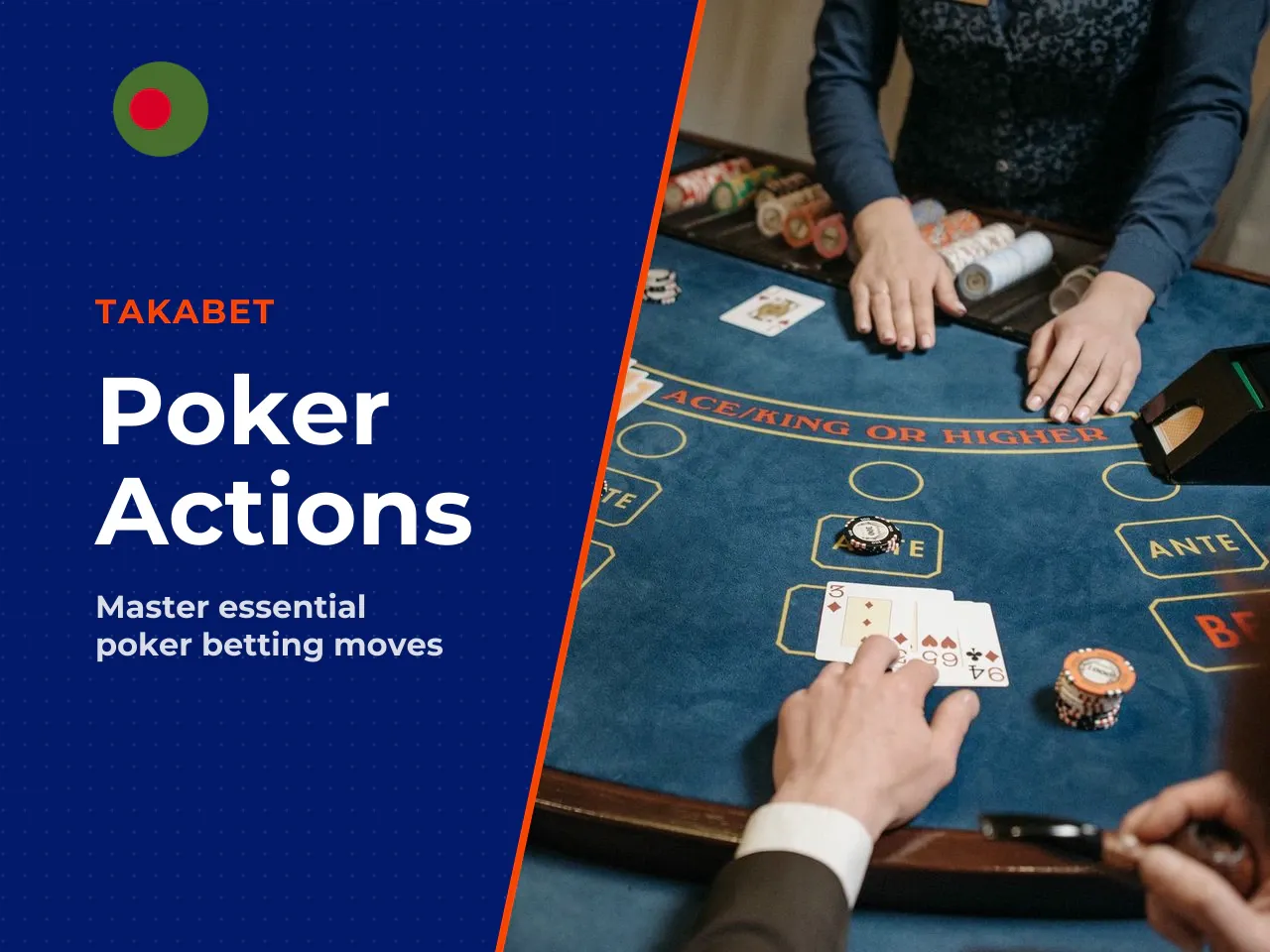
Before describing the table layout, every player must understand the core actions available during each betting round:
- Check:Pass without placing a bet. Only possible if no player before you has bet in the current round. As the classic rule states: "If a player wishes to remain in the game without betting, they check."
- Call:Match the current bet exactly. You put into the pot the same number of chips as the previous bettor.
- Raise:Increase the current bet. This means putting in more than enough chips to call, forcing subsequent players to match your new amount or fold.
- Fold:Discard your hand and exit the current round. You lose any chips already contributed to the pot but risk nothing further.
- All-in:Commit your entire remaining chip stack to the pot. This creates a side pot if other players continue betting beyond your total.
A betting round ends when all remaining players have contributed equally to the pot. After the final round, a showdown occurs: each remaining player reveals their hand, and the best poker hand takes the pot. Crucially, if a player bets or raises and no one calls, that player wins the pot without showing their hand. This is bluffing, and it is one of the key reasons poker has remained so popular for over a century.
Basic Elements of the Table and Game Flow
Each table includes a visualisation of the pot (bank), a dealer button chip to determine the order of play, and personal card zones. Player actions are performed through large interface buttons (Fold, Call, Raise), which on mobile versions have a physical size of 48-60 dp to prevent misclicks. In practical terms, this means players should look for platforms with large, well-spaced buttons to avoid accidental taps when playing on a phone.
Many beginners lose credits due to incorrect evaluation of the bet-size slider. In the course of a UX review for one platform, the implementation of a "confirm all-in bet" feature reportedly reduced the number of accidental stack dumps by a significant margin. Clear poker game structure protects against technical errors. It sounds like a small thing, but when real money is on the line, every interface detail counts.
Why This Matters Even in Demo Mode
Learning the interface in poker demo builds muscle memory that subsequently transfers to real money scenarios. The absence of stumbling when searching for buttons allows you to focus exclusively on game flow (hand dynamics) and the mathematical calculation of confident poker play in the future.
"EEG studies have recorded reduced occipital brain region activation in online poker players when processing outcomes, a possible sign of habituation to losses." - EEG study of online poker players vs. non-players (identified as peer-reviewed in synthesis).
This finding is a reminder: poker is not just a card game. It reshapes how your brain processes wins and losses over time. Being aware of this effect is part of responsible poker playing, whether you are in demo or real money mode.
Poker Review: Who Is This Format For
Summarising this poker review, online poker suits analytically minded people who view the game as an intellectual competition, not a quick income scheme. Skill in poker becomes the dominant factor of long-term success after approximately 100,000+ hands, when randomness becomes nearly negligible. That number might seem daunting. It is meant to be. Poker has always rewarded patience.
Poker is not suitable for those seeking a system with a guaranteed win. No such system exists. For a calm introduction to the industry, the algorithm is simple: start with poker free in a browser, if desired move to poker download for better table control, and only with a cool head and a strictly allocated budget try the best poker formats in the poker real money segment.
What to do next:
- Read our in-depth guide to iGaming to understand the broader industry context.
- Explore hand-ranking charts until you can identify any combination instantly.
- Set a personal monthly loss limit before playing your first real-money hand.
Disclaimer: Information is general in nature and does not replace consultation with a responsible gaming specialist. If you notice signs of gambling dependency, such as escalating deposits, chasing losses, or emotional distress, contact a psychological helpline immediately.
Glossary of Key Poker Terms
| Term | Definition |
|---|---|
| Bankroll | The total amount of money a player has set aside exclusively for poker |
| Blinds | Forced bets posted by two players to the left of the dealer before cards are dealt |
| Buy-in | The minimum amount required to join a table or tournament |
| Community Cards | Shared cards dealt face-up on the table, used by all players |
| Hole Cards | The private cards dealt face-down to each player |
| HUD | Heads-Up Display, a software overlay showing opponent statistics in real time |
| KYC | Know Your Customer, identity verification required before withdrawals |
| Muck | To discard a hand without showing it |
| Odds | The mathematical probability of completing a hand or winning a pot |
| Pot | The total chips or money wagered during a single hand |
| Rake | The small percentage of the pot taken by the poker room as a fee |
| RNG | Random Number Generator, the algorithm ensuring fair, unpredictable card deals |
| RTP | Return to Player, a percentage indicating long-term payout in casino machines (not applicable to player-vs-player poker) |
| Showdown | The final reveal of hands after all betting rounds are complete |
| Tilt | Emotional state leading to poor decisions after a bad beat or losing streak |
FAQ About Poker Online
Can I Start by Playing Only Poker Demo?
Yes, this is the ideal and safest choice. Learning through demo requires neither money nor disclosure of payment data. This mode allows you to study the hierarchy of hand combinations and prepare for full poker play in the future. Most platforms require at least minimal registration (email and password), but financial details are not needed until you choose to deposit. Think of it as a training ground with zero stakes.
Do I Need a Poker Download for Comfortable Play?
No, for basic comfortable play, a download is not necessary. HTML5 technologies allow launching a quality poker playing experience directly in the browser. However, if you need to open 2 or more tables simultaneously, a download client becomes a technical necessity. Desktop clients also support third-party tracking software (HUD) and offer access to a wider range of formats and higher buy-in limits. If you are playing casually on a single table, the browser version is perfectly adequate.
How Does Online Poker Differ from Casino Poker Machines?
The difference lies in the mechanics and the opponent: in online poker you play against real people (real players), and the outcome depends on mathematics and psychology. Casino poker machines (for example, video poker or poker slots) are programmed automata (machine-like gameplay) with a pre-set return percentage built into the firmware, where the factor of your skill is reduced to a minimum. The room in classic poker takes only a fixed rake; in machines, the house edge is permanent and mathematically certain over time.
What Licences Should I Look For?
The most widely recognised international licences come from the Malta Gaming Authority (MGA), the UK Gambling Commission (UKGC), and Curaçao eGaming. An independent RNG certificate from laboratories such as iTech Labs, GamingLabs, or BMM Testlabs adds a further layer of trust. Always verify these directly on the regulator's website, not just the operator's claims. A licence number you can cross-check in a public registry is worth more than any marketing badge on a homepage.
Is Poker Legal in Bangladesh?
Poker exists in a legal grey zone in Bangladesh under the Public Gambling Act of 1867. There is no domestic licensing framework for online poker. Players access international offshore platforms at their own legal and financial risk. For a more detailed overview, see the "Legal Status and Risks" section above. If you are uncertain about your personal situation, consulting a local legal professional is the responsible step before depositing any funds.